In short
- Ask who owns the domain, the site files and the logins before you sign anything.
- Be wary of vague scopes, pressure to decide fast, and designers who can't explain what happens after launch.
- Look at real sites they have built for businesses like yours, and call a few of those owners.
- At the end, you should hold the keys: your domain, your hosting account, your content and your analytics.
Start with what you need the site to do
Before you talk to anyone, write down what the website is for. Keep it simple.
A roofing contractor in Burlington County wants the phone to ring. A salon wants people to book online. A dental office wants new patients to find the hours, the insurance info and a clear way to request a visit. A restaurant wants the menu and hours to be right when someone searches on their phone.
If you can say "I want more calls" or "I want fewer no-show bookings," you can judge every designer against that. If you can't, a designer will fill the gap with what they like to build. That is usually a pretty site that doesn't do much.
Questions to ask before you hire anyone
You don't need to know code to ask these. You just need to listen for clear answers.
Who owns what?
- Who registers the domain? The domain is your web address, like yourbusiness.com. It should be registered in your name, with you as the owner and admin contact.
- Whose account is the hosting in? Hosting is the service that keeps your site online. Ideally it is in your name, or the designer can clearly explain how you can take it with you.
- Do I get the files and content? That means your text, photos, logo files and the site itself, in a form another person could use.
- Do I get the logins? You should be able to log in to everything that runs your site.
What does the process look like?
- How will we communicate, and who will I be talking to?
- What do you need from me, and by when? Slow feedback from the business owner is one of the most common reasons a site drags on.
- How long does a project like mine usually take? A good designer gives a realistic range and explains what could change it. Our own take is in how long it takes to build a small business website.
- What happens if I want changes after the first draft?
What happens after launch?
This is the question most owners forget. A website is not a one-time purchase. Software needs updates, forms break, and your hours and services change.
- Who fixes it if the site goes down?
- Who updates the software that runs the site?
- Are backups made, and where are they stored? If you want to understand backups, we explain them in how to back up a small business website.
- What does ongoing care include, and can I cancel it without losing my site?
How will people find the site?
A site that nobody finds doesn't help you. Ask how the designer handles the basics: page titles, descriptions, mobile layout, speed, and your Google Business Profile details matching your site. Ask whether they can explain what they do in simple terms. If you want the background, see why SEO matters for local businesses and our local SEO checklist.
People also now ask AI tools like ChatGPT for local recommendations. A designer doesn't need to promise anything about that, and no one can promise a mention. But they should know your site can be read clearly by search engines and AI tools. Our page on what AEO is explains it.
Red flags to watch for
None of these alone means a designer is bad. Two or three together should make you pause.
- They won't say who owns the domain or the site. Some designers register your domain in their own name, which gives them the upper hand if you ever leave.
- The quote is vague. "Website design" with no list of pages, features or what is included makes it easy for surprise costs to appear later.
- They promise rankings or results. No one controls Google. Honest designers talk about what they will do, not what Google will do. A promise of a "top spot" on Google is a bad sign.
- Pressure to decide today. A good designer is fine with you taking a week.
- No real examples. If they can't show live sites for businesses like yours, you are the test project.
- They can't be reached. If replies are slow while they want your business, they will be slower when they have it.
- A site that locks you in. Some website builders and agencies use systems that only they can run. Ask what happens if you leave.
- Mostly templates with your logo dropped in, sold as custom work. Templates can be fine. Just be told honestly what you are getting.
- No plan for the site after launch. If the answer to "who looks after it?" is a shrug, you will be paying someone to rescue it later.
What you should own at the end of the project
Treat this as a handover checklist. Ask for it in writing at the start, and check it at the end.
- Your domain name, registered under your name and email.
- Your hosting account, or a clear written explanation of where the site lives and how you can move it.
- Admin logins to the site, so you aren't locked out of your own business.
- Your content, meaning all text, photos, logos and graphics you paid for or supplied.
- Your analytics and search accounts, such as Google Analytics and Google Search Console, set up under an account you control. These are free tools that show how people find and use your site.
- Your Google Business Profile, which should always belong to you, with the designer added as a manager if they help with it. We explain why it matters in why your Google Business Profile matters.
- A copy of the site and its backups, or a clear way to get one.
- Written terms about ongoing care, including what it covers and how to cancel.
If a designer pushes back on any of these, ask why. There is sometimes a fair reason, such as a platform's rules. But the answer should be clear and you should understand it.
Check their work yourself
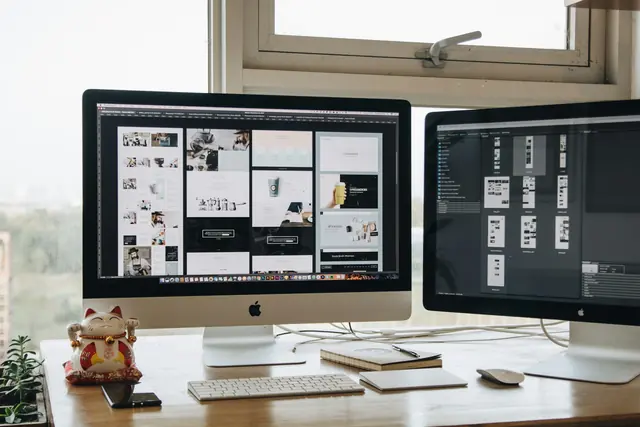
Pull up a few sites they have built. Open them on your phone. Do they load quickly? Is the phone number easy to tap? Can you find the hours? Do they look like they belong to a real local business or like every other template?
Then ask for two or three past customers you can contact. Ask those owners if the designer was easy to reach, if the site came in when promised, and if they still control their accounts.
You can also test your own current site with our free site check so you know where you stand before you talk to anyone. If you are not sure whether to rebuild or repair, read do I need a new website or can mine be fixed. For budgeting, see how much a small business website costs.
Where we fit
We are Avello Labs, a small web studio in South Jersey. We build fast, custom sites for local businesses and then look after them with monthly website care. You can see what we do on our home page. We think you should own your site, so the checklist above is how we work too. Whoever you hire, hold them to it.
Common questions
Should I hire a freelancer, an agency or a studio?
Size matters less than the answers to the questions above. A freelancer can be great but ask who covers the site if they are sick or busy. A larger agency may cost more and hand you to junior staff. A small studio sits between. Judge them on clarity, examples and ownership.
Can I just use a do-it-yourself website builder?
Sometimes, yes. If your needs are simple and you have time, it can work. The trade-off is your time, and that you often can't move the site elsewhere. Ask yourself whether your hours are better spent running the business.
Who should own my domain name?
You should. It should be registered in your name with your email as the contact, even if the designer set it up for you. Ask to see the registration record.
Do I need ongoing care after the site is built?
Most sites need it. Software updates, backups, security and small content changes don't stop after launch. Either someone handles that for you or you do. Our website maintenance checklist shows what is involved.
What if I already have a designer I'm unhappy with?
Start by finding out what you own. Check who the domain is registered to and whether you have the logins. Then decide whether to fix or rebuild. We can look at the site with you.
Not sure where your site stands?
Run our free site check and we will show you what is working, what isn't, and what to ask any designer. Or chat with us if you'd rather talk it through.
Get my free site checkWant more of our posts in your Google results? Google says it shows more from the sources you pick in Top Stories.